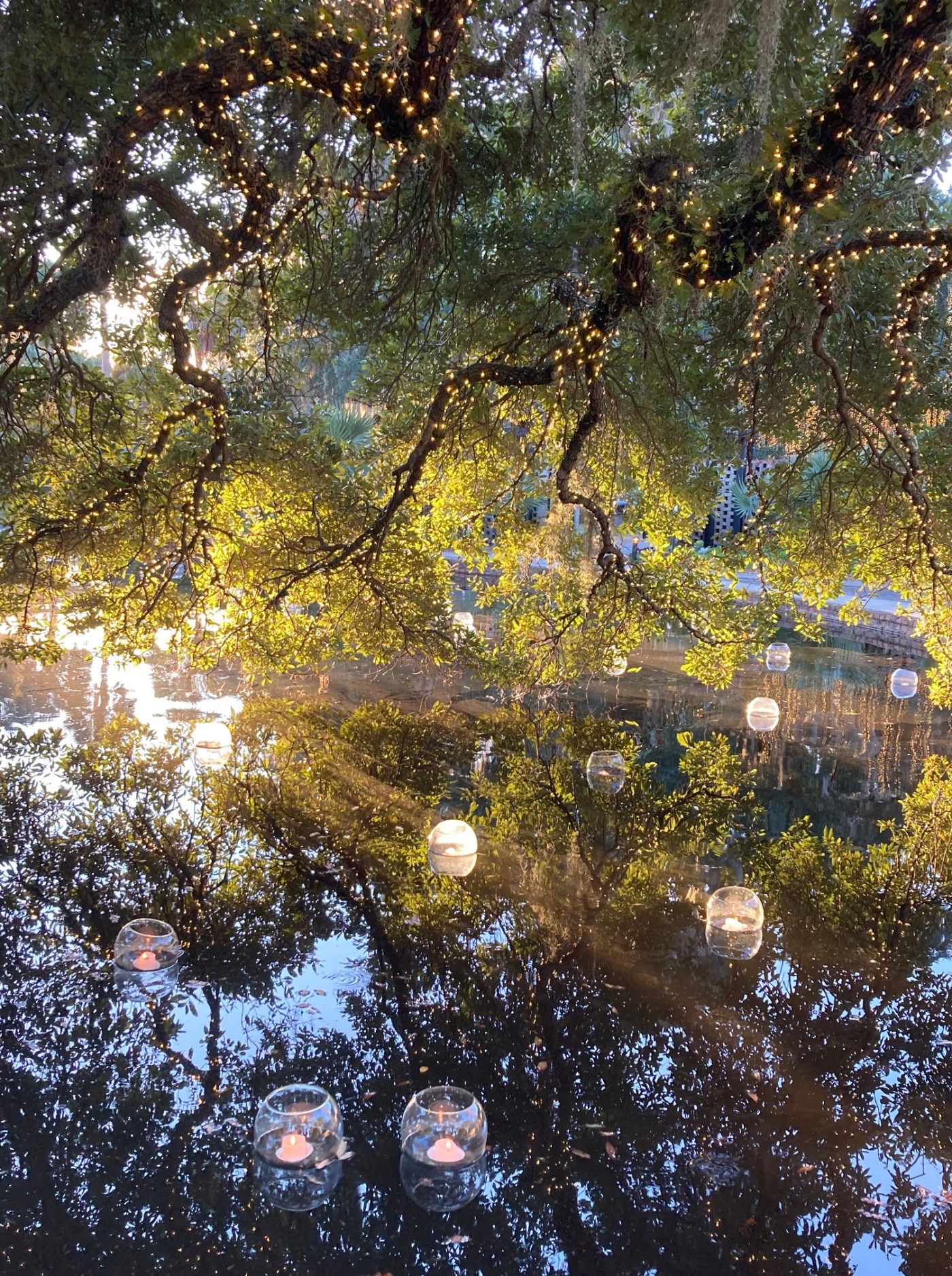
During my visit to Brookgreen Gardens and after it, the words “cri du coeur” arrived in my awareness. I remembered that Phil Cousineau mentioned the “cri du coeur” in The Art of Pilgrimage so days after returning home, pulled my copy from the shelf. The cri du coeur, the cry in the heart, issues the calling.
“What if we… long for a form of travel that responds to a genuine cri du coeur, a longing for a taste of mystery, a touch of the sacred?
For millennia, this cry in the heart for embarking upon a meaningful journey has been answer by pilgrimage, a transformative journey to a sacred center. … Always, it is a journey of risk and renewal. For a journey without challenge has no meaning; one without purpose has no soul.”
Decades ago, “Remember them” resonated as my cri du coeur, and was the catalyst for my own pilgrimage.
“Pilgrimage” as noted by Phil Cousineau:
“Pilgrimage is a powerful metaphor for any journey with the purpose of finding something that matters deeply to the traveler. With a deepening of focus, keen preparation, attention to the path below our feet and respect for the destination at hand, it is possible to transform even the most ordinary trip into a sacred journey, a pilgrimage… What legendary travelers have taught us since Pausanius and Marco Polo is that the art of travel is the art of seeing what is sacred.”
“Pilgrimage is the kind of journeying that marks the move from mindless to mindful, soulless to soulful travel. The difference may be subtle or dramatic; by definition it is life-changing. It means being alert to the times when all that’s needed is a trip to a remote place to simply lose yourself, and to the times when what’s needed is a journey to a sacred place, in all its glorious and fearsome masks, to find yourself.”
I am being attentive to the words ‘the cry of the heart.’ Why did the words cri du coeur arrive? There is the need for synthesis that can’t be rushed.
With “The Art of Pilgrimage” off the shelf, I returned to other pages I had read so many times before. “Considering the Marvel,” speaks to Henry Beston’s experience on Cape Cod to witness the “incomparable pageant of nature and the year”:
“Beston’s book, The Outermost House, became a model witness for what nature has to teach us. There was always something “poetic and mysterious, such as the bird tracks in the sand dunes. One day he contemplates the surf and looks out to sea, imagining what lies on the other side—Santiago de Compostela, “renown of pilgrims”—and recalling how when he was there he was offered a scallop shell, but “I would have none of it, and got myself a seashell from some Galician fisherfolk.” This spirit of seeing for yourself and finding your own talisman reflects the true pilgrim spirit.”
“Consider the marvel of what we see,” he writes in the hushed tones of the contemplative traveler. “Somewhere in ocean, perhaps a thousand miles and more from this beach, the pulse beat of earth liberates a vibration, an ocean wave… So, it goes night and day, and will go till the secret heart of the earth strikes out its last slow beat and the last wave dissolves upon the forsaken shore.”
…The gift he (Beston) brought back, his insights, his observations, are a constant reminder of the beauty and mystery available to those, using as the Sufis said, “the eyes of the heart.” Like the greatest of travel writers, he reveals how any journey, whether as part of a crowd or in solitude, can produce the moment of awe, the vision, contact with the numinous. In stillness, at the still point of our journey, is the redemption of our wasted time.”
The pause is the beauty.
The Art of Pilgrimage – The Seekers Guide to Making Travel Sacred by Phil Cousineau


Leave a Reply