Go to Field Notes for the creative meander discoveries.
Recognizing the Gifts – posted in July, 2019 (before the pandemic upended our ways of being and doing):
This is an open letter to anyone approaching or recently arriving in the second half of life.
First, it’s important to note the second half of life is not associated with any age.
There was a time, a demarcation point, when I was nearing the second half of life. For me, the space was foggy and filled with great uncertainty. I couldn’t find traction in my life and spent a lot of time waiting, which was not my preferred pace. In the past I could find the answer and take action. Most of the strategies and routines I used during the first half of life didn’t seem to work or were no longer appropriate at this time.
Quality of Life
My mother was under hospice care for 26 months. There was a lot of chatter about her quality of life. I recognized the people chattering about quality of life had never even met her or visited her. They were guessing. I was witnessing. This was my pivot point.
I sat with the mystery of it, paying attention to the end of life, recognizing so many changes (and marveling at some), feeling lost at times and also feeling intense loss – all the while, working and tending to life that continued to cycle through the seasons. This was my “liminal space,” the glacier movement into the second half of life. During this time I would not have been able to tell you this. It felt like I was dying too.
After my mother passed away and the estate was closed, I had to sift through the experiences. I knew this life assessment was critical to how I would live in the second half of life.
- What had I learned?
- How could I integrate the gifts I received into life?
- Who was I now?
I couldn’t go back to living the life I had because the “caregiving years” were over. Everything had changed. It wasn’t a “dramatic change,” but a subtle shifting of immensity that occurred over the caregiving years.
The Point of Demarcation
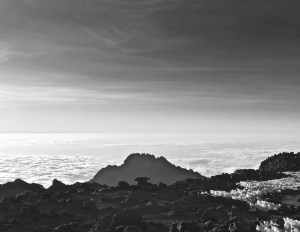
I was standing at the edge of life in 2015.
Before your imagination leaps, let me frame the edge so we are both on common ground by offering the words from Stephen Levine:
Healing is what happens when we come to our edge
To the unexplored territory of the mind and body
And take a single step beyond into the unknown
the space in which all growth occurs.
Healing is discovery
It goes beyond life and death
Healing occurs not in the tiny thoughts of who we think we are
And what we know
But in the vast undefinable spaciousness of being
—of what we essentially are–
Not whom we imagined we shall become.
Beyond the edge, a shroud of fog stretched out in all directions, concealing any hint of dimension or form. There seemed to be nothing there but me, alone, at the edge of desolation due to decisions and actions done and left undone.
This place was unknown by the outside world. The outward surfaces of my life looked familiar to me and everyone around me. No one would know, unless I told them, I was facing the unexplored territory. Although the outward situation had changed, I moved through familiar ground, working and interacting with others as I always did.
One day at the library, I noticed “The Heart of the World – A Journey to Tibet’s Lost Paradise” while browsing the staff’s featured book section on exploration. My monthly travel was confined to familiar 9-hour interstate drives, so wondering what I would find at the heart of the world and an exploration into Tibet drew me in. I checked out the book and joined Ian Baker and the expedition in the comfort of my imagination. Within the chapter, “Tselung,” Ian described my inner world.
We descended into the mists below the pass, with little idea about where we would emerge. The clouds had enveloped us and we could only see a few feet ahead, yet I felt strangely surrendered to the unseen spaces around me. As we dropped lower, shafts of sunlight pierced through the veil of clouds, and we suddenly found ourselves in a glacial cirque. The mists slowly lifted, and we crossed the snow field to where it transformed into a half-frozen waterfall that poured down between black cliffs and disappeared into an abyss. …
The following morning we traversed to a line of trees and descended deeper into the ravines below. …Light strained through veils of mist and rain, revealing abstract patterns of mountains, clouds, and trees. I thought of something the critic William Hazlitt had written in the eighteenth century in praise of mist, of how humans could borrow “a more fine existence from objects that hover on the brink of nothing.” As we descended, our world narrowed to a small circle in which orchids and wispy lichen floated from gray and ghostly trees.
Orchids?! Suddenly a pop of violet appeared in the misty grey landscape I envisioned.
… After a nearly sleepless night, we left in rain, and with the aid of ropes descended lichen-covered slabs into an apocalyptic gorge, a place of mud slides, eroding cliffs and vibrant orchids spilling from the trees. Raindrops beaded like pearls on the leaves of giant magnolia, while lianas and trailers of moss enveloped us in a net of vegetation. Mist swirled around us like ethereal veils.
I never imagined orchids could live at the edge in such challenging external terrain. Ian had directed my attention, as any experienced guide would do, toward the orchids. There was beauty at the edge! I took a second glance at where I stood. Orchids were thriving at the edge. It dawned on me, this was not the abyss of desolation, this was an edge of creation.
Being present in what seemed to be nothingness enabled me to see the wholeness. It was a breakthrough. I was able to take the step (which wasn’t a step at all) to remain at the edge of creation and pay attention to what I would discover.
Beauty or Grief?
I remembered. In 2010 I held a book about grief in one hand and a book about beauty in the other hand. Which book should I buy? My father had died and I was surrounded by the rawness of loss. I pulled “grief” from the bookshelf because I thought I could learn something from it and speed along with grieving process. But I also realized I didn’t want grief to be my focus.
Without knowing it, I was answering, “How am I going to live today?” I picked John O’Donohue’s “Beauty.” It was instinctive and comforting.
The Gift of Beauty
Beauty is a gift of Life. It is free. Ian noticed the beauty during his grueling expedition and noted the details. That’s what I recognized when I read his words. Orchids and rhododendrons could thrive at the edge. I was trying to avoid the edge, yet here was the unexplored territory. Here was the overlooked beauty that surrounded me exactly where I stood. Here was the living world. As I waited with the mystery, the fog began to lift.
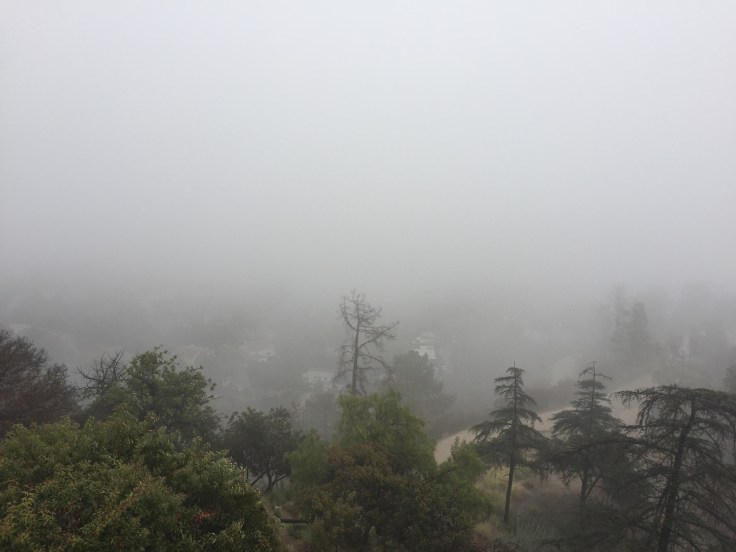
As the fog began to lift, I recognized I was on new ground, the second half of life.
From John O’Donohue’s book, Beauty:
This was an event of pure disclosure: a sudden epiphany from between worlds. ….
A threshold we had never noticed opens,
mystery comes alive around us
and we realize how the earth is full of concealed beauty.
 creative meander
Jean! You are an eloquent writer! What a beautiful journey of self discovery. Congratulations on recognizing your edge and embracing it! Moving into the second half of life has been challenging, but the orchids are definitely worth it! ❤️
Kathy, thank you! I appreciate your feedback. Good to hear from you too! Hope all is well.
I so needed to read this. Thanks for naming and explaining the edge. Figuring out what the next act is – is confusing, exciting and scary. Looking forward to reading more of your insights!
Hi Betsy, Thanks for the note! I appreciate it.
It’s good to hear from you Jean…thanks for sharing your journey. Meandering is a beautiful word and describes for me the distinct difference between the static points in my life and the unity emerging from them. A phrase I like that describes the changes and transformation of being is….instead of swimming in the rapids trying to keep my head above water, I surrender, float on my back and go wherever the River of Life takes me. Meandering, noticing, pausing, savoring, surrendering, listening, these are the markings of my journey now.
How blessed we are! Hope to see you in September
Judy
Thanks for your support! I appreciate the note.