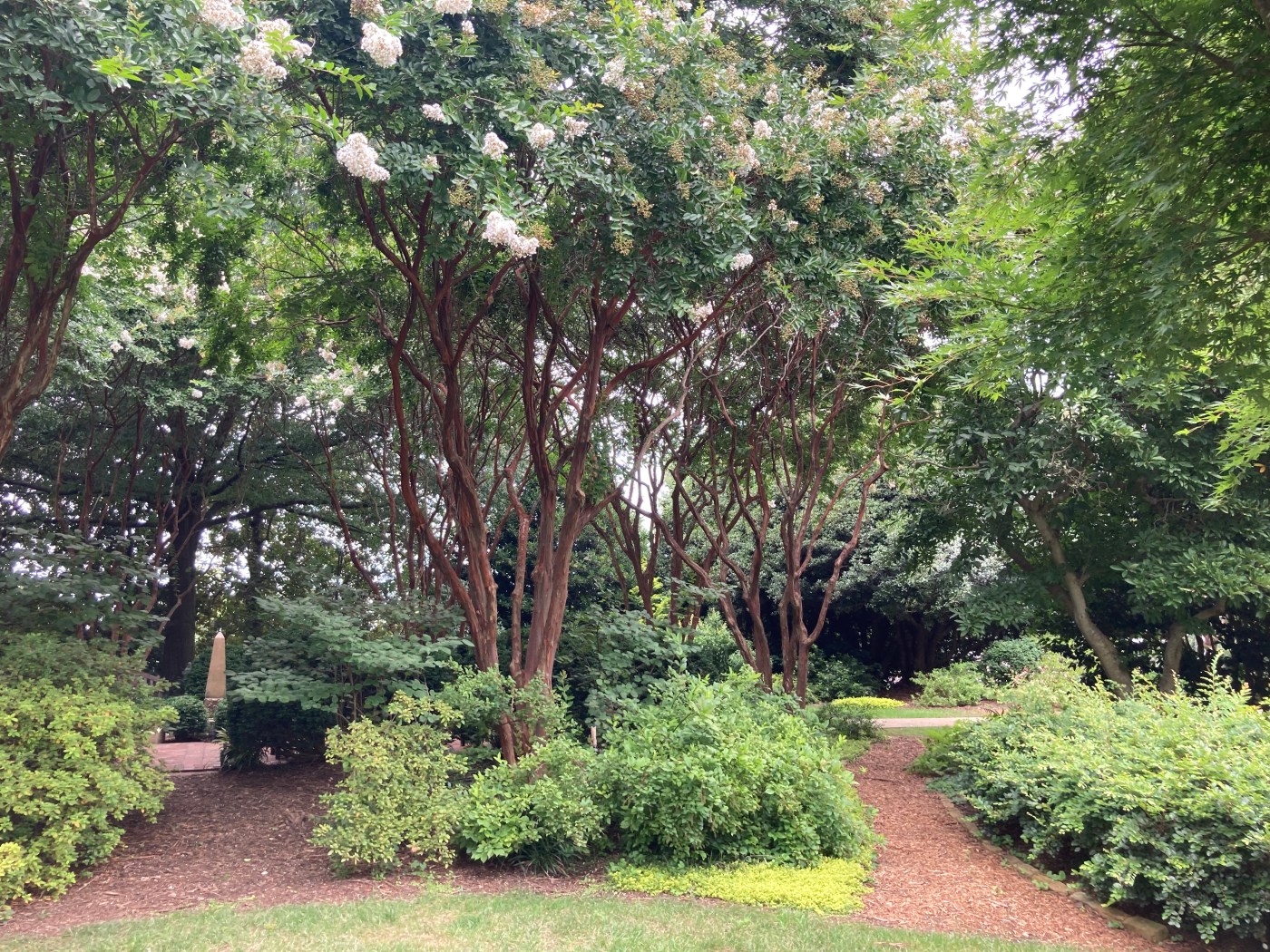
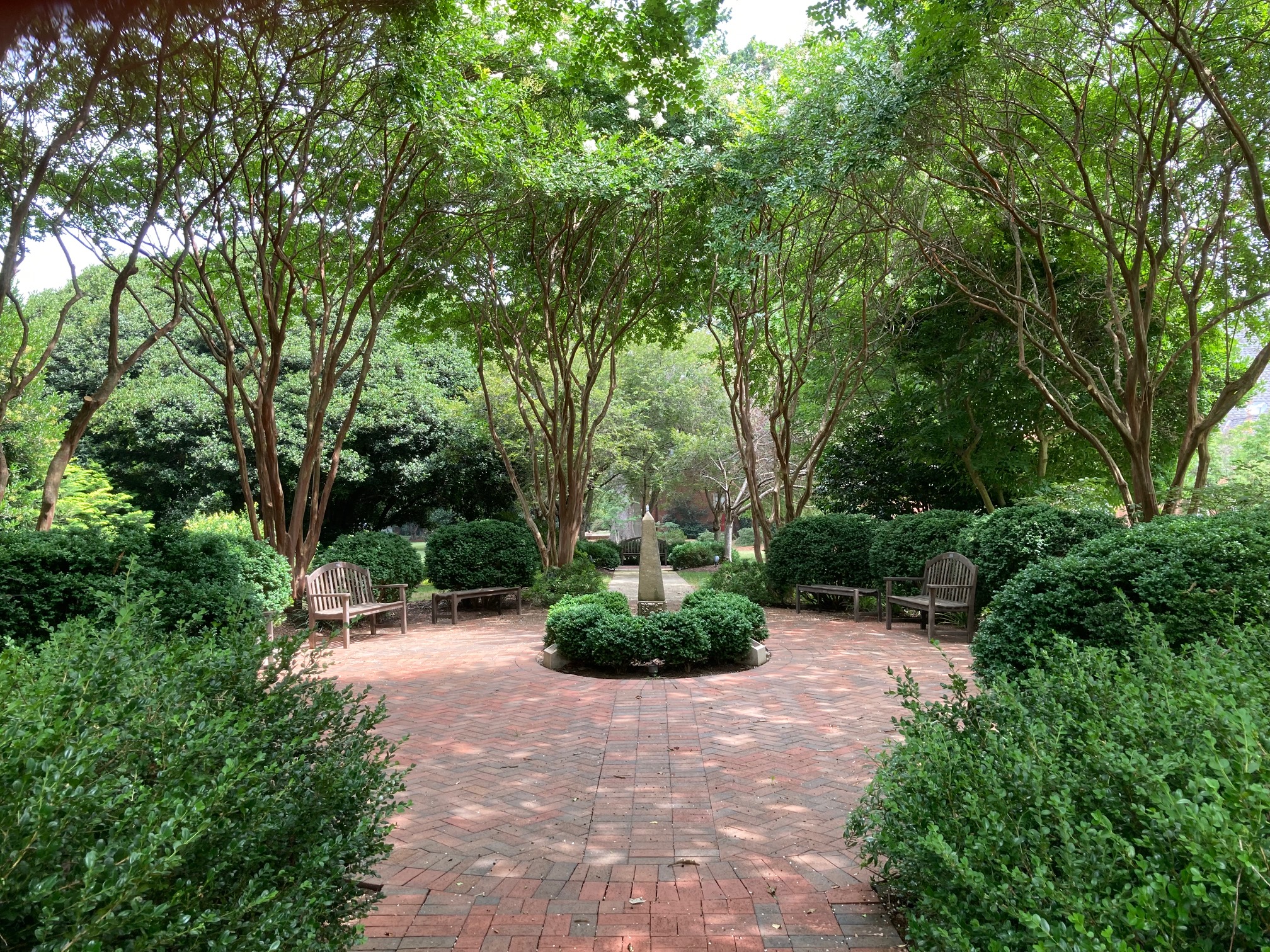
The sheltering space underneath a canopy of white crepe myrtles held the four components of a restorative environment:
1. Being away/escape – the space offered a sense of getting away.
- The canopy of crepe myrtles was the overhead plane that softened the sunlight and provided shade on a hot summer’s day.
- The height of the boxwood offered a short wall of privacy that also enabled the visitor to see beyond the short vertical plane.
- Shafts of gentle light and shadow landed on the brick ground, which provided a stable floor for bench placement and walking.
- Nature came into focus for a period of time. With no other visitors, the place was a private retreat.
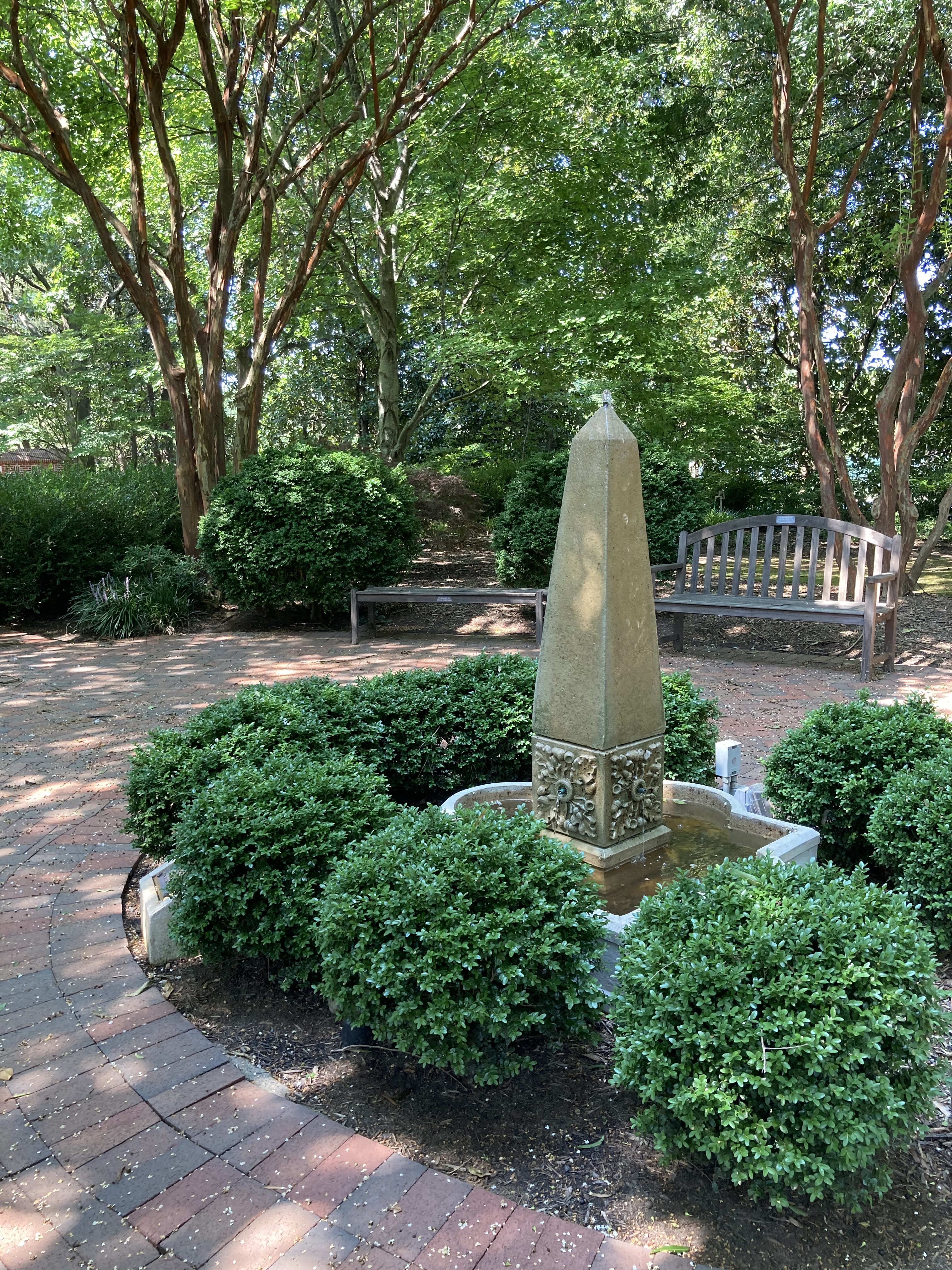
2. Extent – A setting has extent if it has sufficient content and structure that can occupy the mind for a period long enough to allow directed attention to rest.
- A generous offering of benches provided differing views of the inner and outer gardens.
- A buffering edge of trees and shrubs enhanced the sense of private enclosure while also blocking the noise and view of the road. This space was intentionally created for reflection.
3. Soft Fascination – refers to effortless or involuntary attention. Soft fascination elicits wonder.
- Observing water bubble up and slide down the side of the fountain.
- Noticing the movements of light and shadow on the brick floor.
- Nature provided an opportunity for mental wandering.
4. Compatibility – a setting is compatible if there is a good fit between an individual’s purpose or inclination and the kinds of activities supported, encouraged or demanded by the setting.
- Reflection is the primary purpose of this restorative garden within a larger garden and columbarium.
- There is seating to accommodate visitors.
- The short wall of boxwoods ensures both privacy and enables the awareness of other visitors in the larger garden.
Learn more:
From the Journal of Environmental Psychology, Assessing the Restorative Components of Environments
From Positive Psychology, What is Kaplan’s Attention Restoration Theory?
 creative meander
Leave a comment