I just cycled back to Phil Constineau’s pilgrimage to Angkor Wat. I bought The Art of Pilgrimage when it was just published in 1998. Only recently I recognized the deeper connections: Angkor Wat was the center of Phil’s book, and the spark that would light his travelers lamp was a book from Phil’s dad.
This book quietly illuminates the full circuit of a living gift. It keeps giving and the reach continues to expand.
Discovering the Hidden Beauty of the World
Phil received the book about Angkor Wat on his eleventh birthday. It wasn’t a gift he had asked for, but the bronze-tinted book depicted sculptures of the long forgotten world of the Khmers that transported the eleven-year old beyond known boundaries.
From that moment on, the book came to symbolize for me
the hidden beauty of the world.
With the transportative magic that only books possess,
it offered a vision of the vast world outside of my small home town in Michigan; it set a fire in my heart and through the years inspired in me the pilgrim’s desire to see this wondrous place for myself.
Phil’s father became ill decades later. While visiting him, Phil made a promise to his dad that once he recovered they would travel together. Phil described the itinerary in detail, beginning with stops in Europe, and he concluded with “We could take a direct flight from Paris to Phnom Penh and visit Angkor Wat. His dad seemed puzzled by the final destination.
Phil wrote: “Don’t you remember the book you gave me as a boy?” I asked him, disappointed in his response to my cue.
His dad “riffled through the memory of a lifetime of books he had bestowed.” …Then his face lit up and he harrumphed,
“Oh yes, Angkor, the Malcolm MacDonald book, the one with the sculptures of the Temple of the Leper King on the cover.” He paused to consider the possibilities of our traveling together, then painfully readjusted himself in his old leather reading chair.
It Would Be Wonderful
“I just wish I were as confident as you that I was going to recover,” he said with the first note of despair I’d ever heard from him. “Of course, I’d like to see these places with you. It would be wonderful.” Then his voice broke, “But I don’t know, son, if I’m going to make it.”
No one I’ve ever met has pronounced the word “wonderful” like my father. He stressed the first syllable, “won,” as if the adjective did indeed have its roots in victory and triumph. He so rarely used upbeat words so when he did I knew he meant it.
Four months later, on the very Ides of March which he had announced every year in our house as though it were the strangest day on the calendar, my father died in his sleep.
While Phil packed his dad’s books after the funeral, he made “one of the few vows in my life.” He would take the journey to Angkor Wat for his dad and for him. As he wrote: “…to make the pilgrimage to a place made holy by the play of light on the stone and the devotion of pilgrims who had walked astonishing distances so that they might touch the sacred sculpture and offer their prayers on the wings of incense. And, in so doing, perhaps restore my faith in life itself.”
Arrival at Angkor Wat
Phil and his brother made it to Angkor.
“All my adult life, I had been enchanted by this dream of ruins, as if living out that single image from the book my father gave me for reasons I’ll never know. I felt inconsolably lonely until I recalled the old hunter from Greenland who had the grace to simply accept the gift from the far north and receive the beauty of the mystery.”
As I attempt to paraphrase Phil’s story, it loses the personal narrative of his words. Hopefully Phil will welcome my use of his words to finish this story.
Phil wrote:
Late that afternoon, while deep in the dank corridors of the haunting temple of Bayon, with its fifty-four colossal faces of the Bodhisattva Avalokiteshvara staring at me, I thought of my last conversation with my father. He asked me what I had assumed to be obvious to him: Did my love of books influence you?
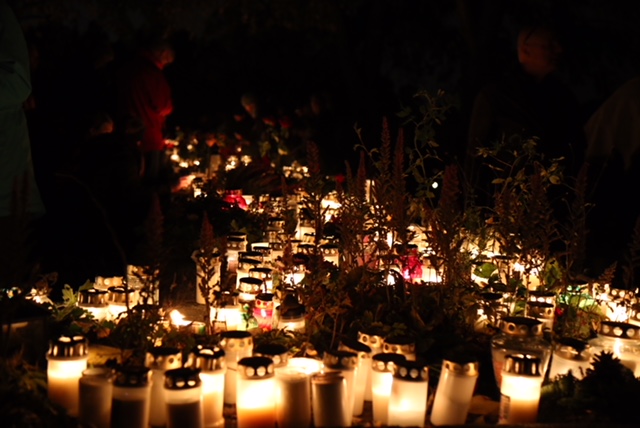
The words burned like a branding iron as I lit a candle and sticks of incense for him and, in the Bayon’s dark corridors, said a silent prayer that his spirit might find peace.
Recognize the Sparks that Light the Lanterns
Phil’s Angkor story doesn’t end there in the Bayon’s dark corridors. He touches something more in the ending that restores him. But the focus here is the beginning. The spark is the gift. The packaging is rarely the container one expects. When recognized, it enriches and enlivens everyone.
Simply accept the gift from the far north
and receive the beauty of the mystery.
 creative meander
Not the give he asked for .. but one that shaped his life. Beautifully told Jean.
Thanks Lisa! I appreciate your comment.