“It is a time when all the old clarities break down and everything is in flux. Things are up in the air. Nothing is a given anymore, and anything could happen. No one knows the answers: one person says one thing and someone else says something completely different.” (William Bridges)

That description seems to fit the world in the present day. I know I’m in the middle phase of the transition process due to the global pandemic and the changes it has sparked and catalyzed. William Bridges calls this time the Neutral Zone, because “it is a nowhere between two somewheres, and because while you are in it, forward motion seems to stop while you hang suspended between was and will be.” 

As I study transitions, I recognize the Not Knowing Place is part of my transition process. In the past I placed too much emphasis on getting out of the Not Knowing Place. Bridges writes, “when change is deep and far-reaching, this time between the old identity and the new can stretch for months, even years.”

I noticed that time became fluid during the pandemic/Stay at Home order and the boundaries of time (such as self-imposed deadlines and schedules) washed away. Continue reading

Finding the Neutral Zone of Transition

“It isn’t the changes that do you in, its the transitions. They aren’t the same thing. Change is situational: the move to a new site, the new boss, the revisions to plans. Transition is psychological; it is a three-phase process that people go through as they internalize and come to terms with the details of the new situation that the change brings”. –William Bridges from the book “Managing Transitions”.

What Happens When Your World Changes?

The lifting of the Stay at Home order only intensified change. The new reality was evident in every outside interaction. Continue reading “Finding the Neutral Zone of Transition”

Standing in Paradox and the Tension of Opposites

As I continued to investigate the Not Knowing Place during the Stay at Home months, I remembered reading about standing in paradox and the tension of opposites in the book, “The Great Work of Your Life” by Stephen Cope:

“Marion Woodman writes, “We learn to live in paradox, in a world where two apparently exclusive views are held at the same time. In this world, rhythms of paradox are circuitous, slow, born of feeling rising from the thinking heart. Many sense such a place exists. Few talk or walk from it.”

Carl Jung’s developmental strategy for standing in paradox: One must hold both sides of a paradox at the same time without choosing one or the other. Exiling neither. Privileging neither. In this way, we can gradually learn to tolerate living in the tension of opposites.

Marion states the technique with stunning clarity: “Holding an inner or outer conflict quietly instead of attempting to resolve it quickly is a difficult idea to entertain. It is even more challenging to experience. However, as Carl Jung believed, if we held tension between the two opposing forces, there would emerge a third way, which would unite and transcend the two. Indeed, he believed that this transcendent force was crucial to individuation. Whatever the third way is, it usually comes as a surprise, because it had not penetrated our defenses until now. A hasty move to resolve tension can abort growth of the new. If we can hold conflict in psychic utero long enough we can give birth to something new in ourselves.”

Hold conflict in psychic utero. This is a skill that can be learned. But it requires a host of collateral skills that most of us in the west has not nurtured: the capacity to stand in the mystery; the capacity to tolerate the unknown; the courage to live in the wilderness for a while; the love of the dark and the night and the moon; the wisdom of the circle, not the line.”

The Intimate Familiarity of a Place Known is the Not Knowing Place

“The perfection is in the repetition, the sheer ordinariness, the intimate familiarity of a place known because we have visited it again and again in so many different moments.”

As I reread the words by Wayne Muller on April 8 while under a Staying at Home order, I recognized the intimate familiarity of “a place known,”  was the unknown.  I have spent a lot time writing about the unknown, but rarely valued its true worth. Throughout life, it served as a catalyst. I always wanted to know, to find the answer and take a step into knowing. Time spent not knowing was viewed as wasted time. The receptivity of “the gift of time” during March enabled me to recognize the Not Knowing Place. And as Muller suggested, I have visited it again and again in so many different moments. Through all the seasons, through all the years, through all the days, and even in the moments, I have found myself in the Not Knowing Place.  I actually “knew” this place! Continue reading “The Intimate Familiarity of a Place Known is the Not Knowing Place”

Paying Attention to the Known and Unknown of Life


My creative meander in March that started with Receiving the Precious Gift of Time led me back to familiar ground in June. During the uncertainty and upheavals between March and June, I revisited chapters from “A Year to Live” by Stephen Levine. Noticing, Gratitude and A Commitment to Life helped me befriend the unknown. His book provided hope and structure during the months of change out of my control. Here’s the first paragraph from the Introduction:

This is a book of renewal. It is not simply about dying but about the restoration of the heart, which occurs when we confront our life and death with mercy and awareness. It is an opportunity to resolve our denial of death as well as our denial of life in a year-long experiment in healing, joy, and revitalization.

When my calendar was cleared in March, I felt the loss of routine and social interaction. I was naively hopeful, expecting that we would return to something new in April. There was no return in April but there was something new: Stay At Home orders.

With nowhere to go, few distractions, I kept writing about what I encountered during the global pandemic. Changes out of my control and transitions experienced during long-distance caregiving and end of life care (2010-2017) helped me in many ways during the Stay at Home months. I had experienced a micro of this unexpected macro that started in March.

Ten years ago, an orange leaf on the front cover of a book caught my attention while browsing in a bookstore. I saw the title “Parting” and then “A Handbook for Spiritual Care Near the End of Life.”
My initial thought, “It’s too late for that book.” My dad had passed away in April 2010 and my grief was raw in June 2010. I had believed he would live into his nineties due to his love of life and learning. Everyone was blindsided when he was diagnosed in March and offered a hopeful prognosis.

Instead of dismissing the book, I picked it up and read the Foreword, which included: …Spiritual care for the purpose of this handbook is soul care, helping the human spirit in its search for peace. It is the attempt to help those near the end of life feel whole, fulfilled, and in harmony with their world and higher power. Religious experience may or may not be spiritual, and spiritual experience may or may not be religious. Regardless of the dying person’s religion or persuasion or faith tradition, spiritual care near the end of life supplies a deep human need.

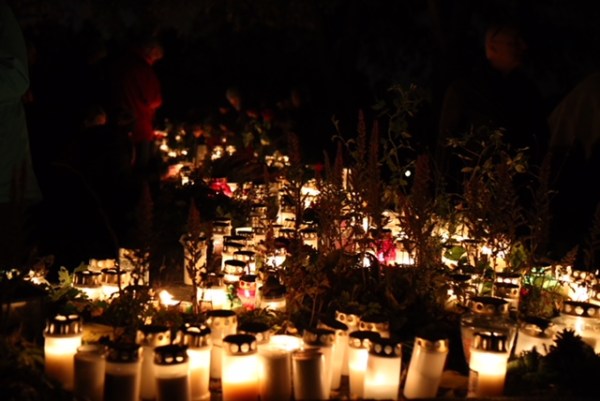
I bought the book that day in 2010 and read it during Father’s Day weekend. An odd thing to do—dive into the dying, but my motivation was to dissect the misery and what had transpired in forty days. I needed to understand and “helping the human spirit in its search for peace” offered a light of peace in the unfamiliar darkness that descends with death. I accepted the light. It was as gentle as a single candle flame.

Found of page 3 in Parting:

One physician says that the best way to improve spiritual care for the dying is to improve it for the living. All too often, the day-to-day business of life gets in the way of the inner life. Death clears the calendar; it uncrowds life so that spiritual needs come to the forefront.

I asked myself, “Why wait? Why wait until end of life to pay attention to our spiritual needs? Why not now?” These questions have stuck with me since 2010. Time and time again, I cycled through change and transition due to a loss or a death. I would find peace and then lose it. Some “thing,” or connection, seemed to be missing.  The physician touched upon it in “Parting”, the day-to-day business of life gets in the way of the inner life. In March 2020 there was suddenly time to pay attention to the inner life. The two-week “hold” that transformed into a Stay at Home order was lifted on May 22. Plans for 2020 died. The death of the familiar day-to-day routines cleared the calendar.  Ways of doing changed. Ordinary events were no longer ordinary (or no longer existed). There have been many endings and each ending carried varying degrees of loss and grief. There was familiarity but disconnection, and a lot of unknown. The outside world looked the same, but there was an unseen hill of loss.

I had been here before.

And so Levine’s words return, replacing book with journey, and dying with what has died:

This is a journey of renewal. It is not simply about (what has died) but about the restoration of the heart, which occurs when we confront our life and death with mercy and awareness. It is an opportunity to resolve our denial of death as well as our denial of life in a year-long experiment in healing, joy, and revitalization.

Next: The Intimate Familiarity of a Place Known is the Not Knowing Place
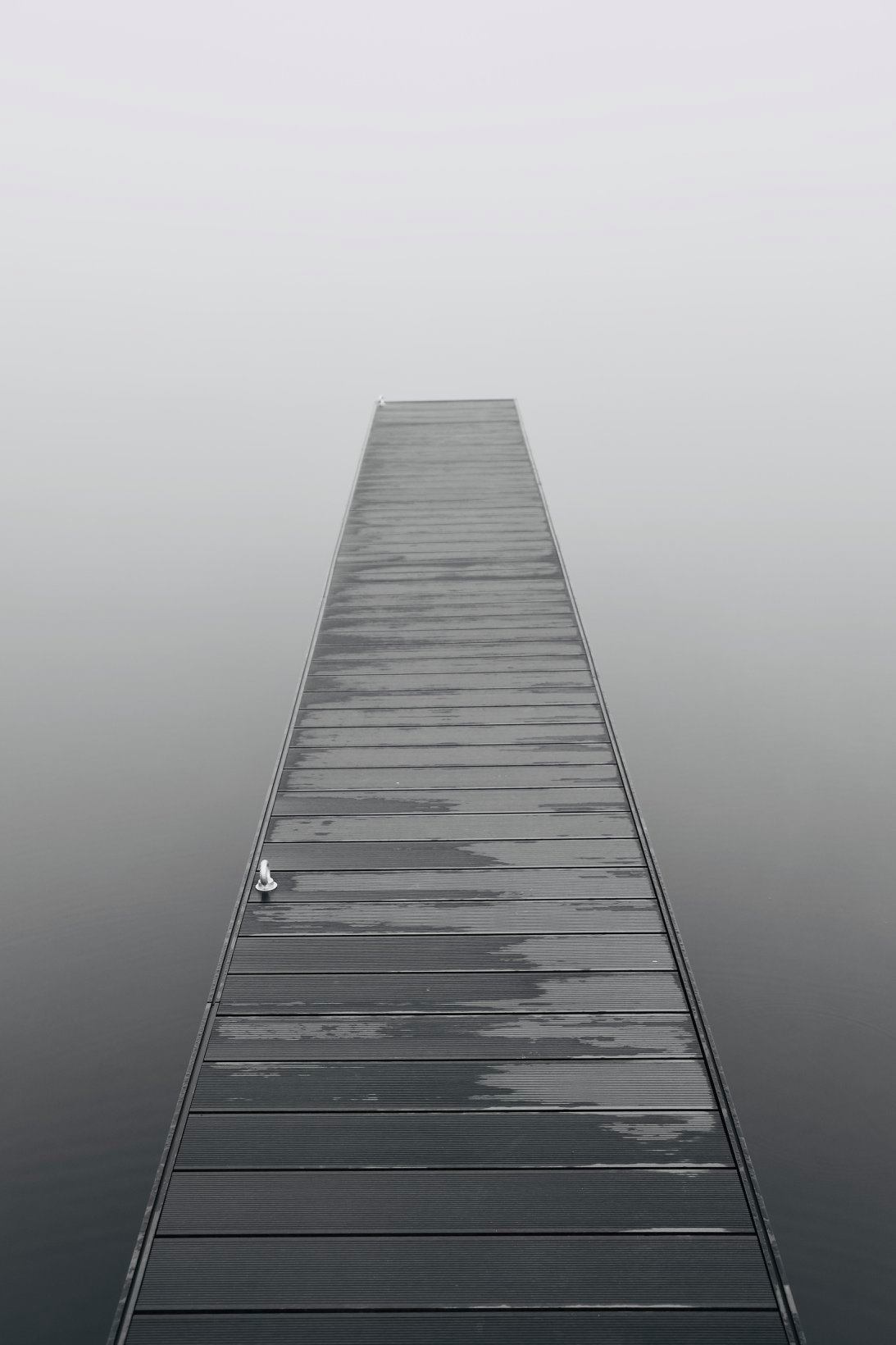


Sabbath honors this quality of not knowing, an open receptivity of mind essential for allowing things to speak to us from where they are. If we take a day and rest, we cultivate Sabbath Mind. We let go of knowing what will happen next, and find the courage to wait for the teaching that has not yet emerged. The presumption of the Sabbath is that it is good, and that the wisdom, courage, and clarity we need are already embedded in creation. The solution is already alive in the problem. Our work is not always to push and strive and struggle. Sometimes we only have to be still, says the Psalmist, and we will know.
From the conclusion of the chapter Beginner’s Mind in the book, “Sabbath – Finding Rest, Renewal, and Delight in Our Busy Lives” by Wayne Muller.

And so, I allow these words to speak to me. I remember last week how the days started to melt together. It seemed like Wednesday but it was only Tuesday! There was a spike of panic, the worry of memory loss but then I turned away from that worry. Continue reading

The Power of “Remember Them” – They Continue to Live and Become “Known”

In memory and in honor of the unknown soldiers of Alpha Company, many who became known due to the efforts of Phil Woodall. An excerpt from his first letter, so many years ago:

Dear Jean,
East 47 has an answer – the letter to Alpha Company is a poem. It is attached for you. I placed it at the base of panel 47 because on rows five and six are three Alpha Company members: Lt. Gary Scott, Lt. Frank Rodriquez, and PFC Manuel Ruiz – all killed March 29, 1968 in a paddy around Hue. The dates are documented in the book “Dear America,” excerpted from a letter that I wrote my Dad on April 5, 1968; the day after Martin Luther King was slain.

Continue reading “The Power of “Remember Them” – They Continue to Live and Become “Known””

Turning to Prepare for the Journey into the Unknown

Every day, every year circles around the silent turning of cycles and rhythms.

This is no longer the hopeful two week sprint cycling back to the known. This is a challenging expedition into unchartered terrain.

I continue to downshift. Yesterday as the new “Stay At Home” order went into effect, I realized the need to adjust my “life retraction” schedule. Do I still need an alarm to wake me up at 5 AM? I decided no. I’ll honor my body’s inner clock and my need for rest.

When I was experiencing upheavals and uncertainty while my mother was under hospice care in 2015-2017, I discovered some tips for a household retraction (in the book, Home Comforts by Cheryl Mendelson) and saw how her advice also applied to a life retraction during that time. The “life retraction” advice seems helpful now.

Continue reading “Turning to Prepare for the Journey into the Unknown”

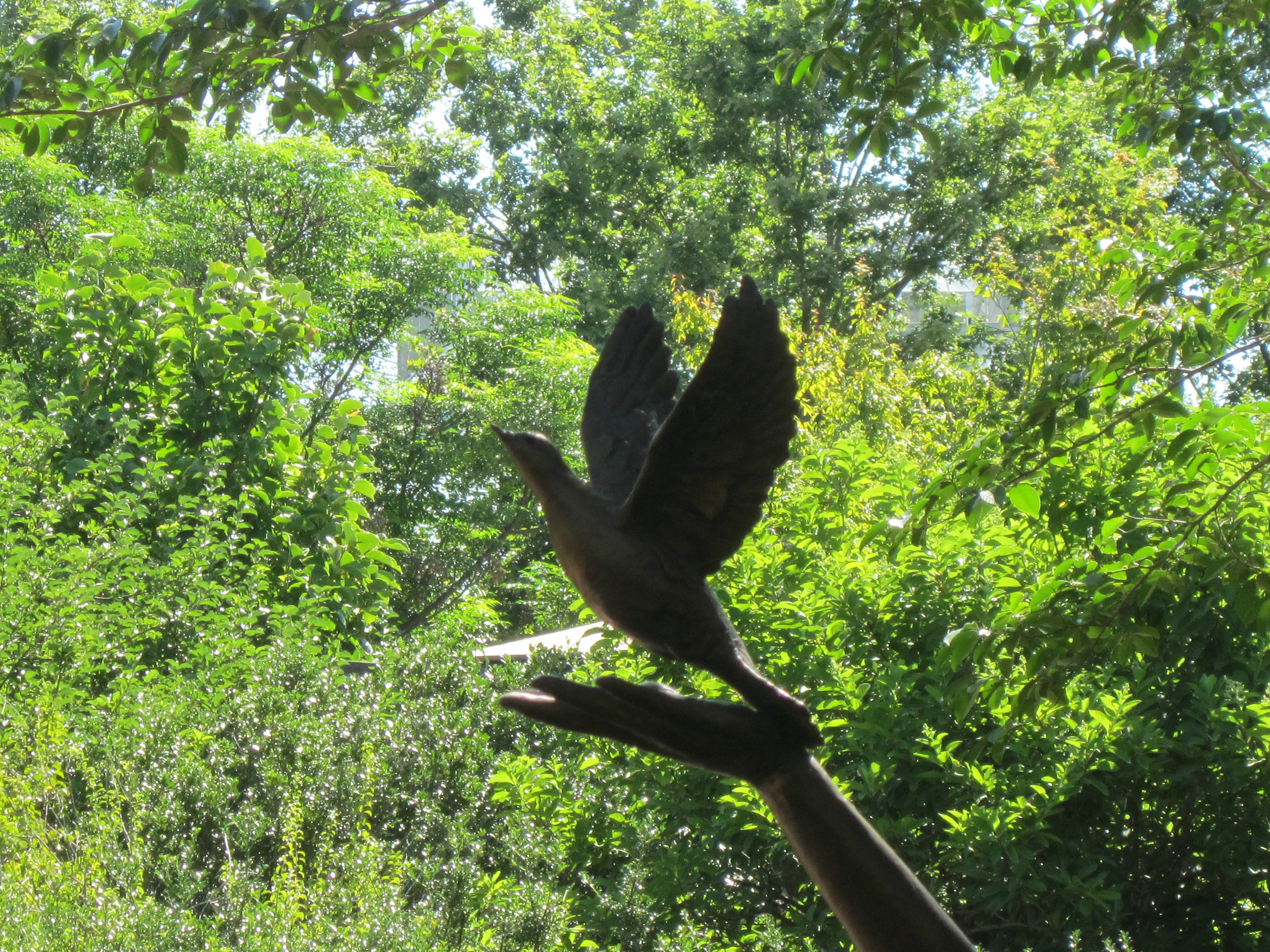
Sitting here now, the image of the open hand with bird came to mind as the words “giving and receiving” arrived in my awareness.

What do you see: giving or receiving?

The first question, “What do you see: giving or receiving?”
I thought of the open hand, the bird’s wings. It seems to be giving, but then I realized on a second glance it could also be receiving. The first glance sees “giving,” and the second glance sees “receiving.” Time seems to make the difference in what I see. The photo may capture one aspect, but the other is there too. What’s important to recognize is the exchange—the dynamic movement. It is both, giving and receiving, the unceasing exchange of energy.

Continue reading

Separating the Wheat of Life from the Chaff — some wisdom from Helen Luke’s essay, “The Odyssey”:
“Why do you speak of a winnowing fan,” said Odysseus, “when you must know very well that this is a beautiful oar with which I cleave the great waters of the wine-dark seas around us?” …

“You are right, I am not ignorant of the oar… I was not pretending by using the words ‘winnowing fan’…I ask you now only to think of the meaning of that image.”
Continue reading “Separating the Wheat of Life from the Chaff”

Gifts that Keep Giving

I just cycled back to Phil Constineau’s pilgrimage to Angkor Wat. I bought The Art of Pilgrimage when it was just published in 1998.  Only recently I recognized the deeper connections: Angkor Wat was the center of Phil’s book, and the spark that would light his travelers lamp was a book from Phil’s dad.

This book quietly illuminates the full circuit of a living gift.  It keeps giving and the reach continues to expand.

Discovering the Hidden Beauty of the World

Phil received the book about Angkor Wat on his eleventh birthday.  It wasn’t a gift he had asked for, but the bronze-tinted book depicted sculptures of the long forgotten world of the Khmers that transported the eleven-year old beyond known boundaries. Continue reading “Gifts that Keep Giving”

Recognizing the Vastness That Has the Potential to Transform Us

“The rewards are infinite when we keep looking.”

As soon as I read that sentence by Mark Nepo, I thought of my friend walking the shore of Boneyard Beach immersed in his creative process.

Nepo’s words are in the chapter “Going with the Stream” from his book “Drinking From the River of Light.” The chapter begins with an epigraph by Yogananda:

Never give up, then surrender

Continue reading “Recognizing the Vastness That Has the Potential to Transform Us”

Recognize Creative Tension as a Source of Creative Energy

Once again, I found myself stuck in the foggy gap. I’ve been focused on defining my vision for this second half of life (not a bad thing) but there’s a lot of unknown in this new life. I got fixated on the fog of uncertainty, but today I caught a glimpse of what was in front of me:  the reality of creative tension. Once again, the fog lifts (and I do recognize this is a pattern).

What is creative tension?

I’ve been approaching creative tension as the obstacle, which is a big mistake. It can actually be the force to move me forward. Peter Senge dives into the topic in his book, The Fifth Discipline:

The juxtaposition of vision (what we want) and a clear picture of current reality (where we are relative to what we want) generates what we call “creative tension”: a force to bring them together, caused by the natural tendency of tension to seek resolution.

The gap is the creative tension

Senge continues later in the book: The gap between vision and current reality is also a source of energy. If there was no gap, there would be no need for any action to move toward the vision… Continue reading “Recognize Creative Tension as a Source of Creative Energy”

Life’s Reflection at 47E – the Interconnectedness of One Veteran’s Action to Remember Them

I visited 47E at the Vietnam Veterans Memorial on Labor Day. It’s been over two decades since my last visit. The photo is my attempt to capture the light, life’s reflections and the promise of RESURGAM, which is a vast interconnectedness that keeps weaving through time.

As for words, remembering Phil Woodall is important. His name is not on the Vietnam Veterans Memorial. He’s the Vietnam veteran who drew my attention to 47E with two written words: Alpha Company.

Continue reading “Life’s Reflection at 47E – the Interconnectedness of One Veteran’s Action to Remember Them”

Sitting Under Such Enormous Space

From “Learning to Walk in the Dark” by Barbara Brown Taylor:
“How long since we have done this?” Ed asks in my ear.
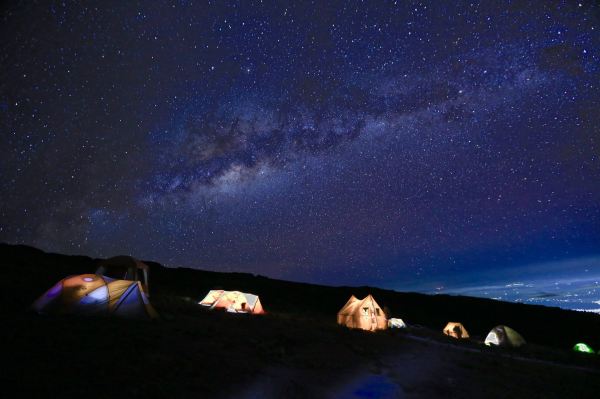
How long since we have left our house, which we know so well, to climb a hill and sit next to each other in the dark with nothing to do but wait for the moon to rise? How long since we have sat quietly under such enormous space?
“Twenty years,” I say.
“Why is that?” he says.
He and I both know why, but the answer makes me so sad that I cannot say it out loud. We have been busy. For twenty years.
Busy? The word loses all meaning under the canopy of this sky.

“…be surprised to find beauty in unexpected places where the ungraceful eye would never linger.” – From “Beauty” by John O’Donohue

“We lose track of time and of place, we move into a timeless time and a placeless space when we are in a creative state. Afterward, we know we have tasted something worth remembering, something that will last. And often we have a special gift to bestow on others because of the journey we have undergone in our creative work.” —From the book “Creativity” by Matthew Fox.

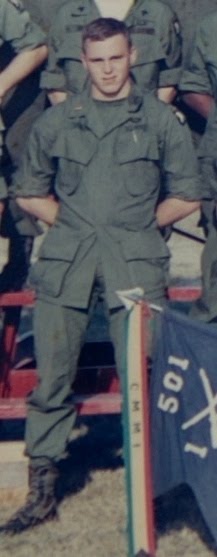
Ten years ago—July 28, 2009—a fierce thunderstorm raged outside. The lightening was so intense, I decided to unplug all electronic devices and read a book. Unexpectedly, the image of a soldier dressed in combat fatigues flashed in my imagination as vividly as the lightning outside.

Soldier dressed in combat fatigues

Continue reading “Why I Wrote about Standing in No Man’s Land during the WWI Christmas Truce”

“Creativity is not a noun or even a verb—it is a place, a space, a gathering, a union, a where—wherein the Divine powers of creativity and the human power of imagination join forces. Where the two come together is where beauty and grace happen and, indeed, explode.”

Matthew Fox, from his book, “Creativity”

Blog at WordPress.com.

Up ↑