Wordsworth: “Our senses drink in the secrets of nature…”

From Karen Armstrong’s new book, Sacred Nature: If we allow it to enter our lives, nature can inform our minds and become a formative influence.

We can begin by taking simple steps, perhaps sitting in a garden or a park for 10 minutes a day, without headphones or a mobile phone, simply registering the sights and sounds of nature. Instead of taking photographs of our surroundings, we should look at the birds, flowers, clouds and trees and let them impress themselves on our minds.

Continue reading
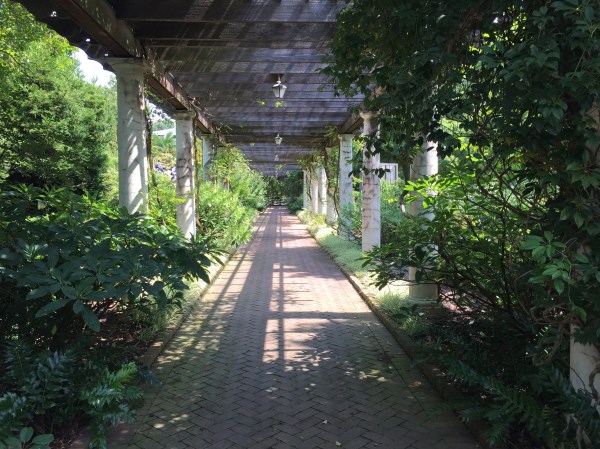
Learning about restorative gardens

Taking the Introduction to Therapeutic Horticulture course (online) during May-July enabled me to see the “hidden” structures in gardens. Of course, the structure is always in clear view, but I haven’t attended to those details until now. 

My interest has landed on restorative gardens, the characteristics in healing gardens and the therapeutic power of beauty.  Here’s what holding my attention this month:

Four phases of interaction in nature (addressed in Johan Ottosson’s doctoral thesis, The Importance of Nature in Coping):

  • Phase I – Inert objects
  • Phase II – Plants and greenery 
  • Phase I + II – Nature 
  • Phase III – Animals 
  • Phase IV – People 

Eight characteristics of a restorative garden (Grahn, 1991) (Stigsdotter 2015):

  1. Serene
  2. Wild
  3. Rich in species
  4. Space
  5. The common
  6. The pleasure garden
  7. Festive 
  8. Culture
Continue reading “Learning about restorative gardens”

Blog at WordPress.com.

Up ↑