May 3: Finding my way to Cote 304
I could see the approach of Cote 304 because a grove of Australian pines was nearing. The worst areas devastated by the war were reforested in the 1930s with Australian pines. It would take over three to four centuries for nature to fully recover the area. That evidence was clear wherever I went from Fort Vaux to Le Mort Homme where the artillery had broken the ground and shattered the subsoil.
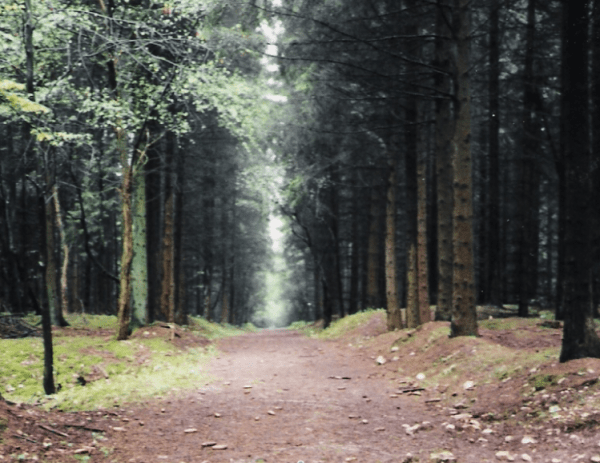
The car turned onto a narrow lane that meandered through a forest of green conifers, which held back the sun and cast darkness onto the wood line floor. We approached the summit and circled around a tall monolith memorial. Marc and I got out of the car and I walked over to the woods at Cote 304. The ground was pocked and cratered by the bombs and ammunition that had blasted devastation into the ground. There was a dirt road cutting into the wood line. The stronger voice inside me whispered, “Go there.” I walked into the wood line aware of the magnitude of death that saturated the soil, knowing each step I took at Cote 304 was on the battleground where the living had fallen dead.
I stood there, feeling like a living sacrifice, with my hand up near my face. I could feel my breath on my hand. I could feel my face against my hand. I needed this sensory connection to life. As I stood there, the wind whispered through the pines. My eyes noticed the ground was blanketed in pine needles. Green moss grew in patches. Weeds grew in other places. There was life on the wood line floor. Although it looked dark from the road, I realized there were shafts of light streaming in the wood line. The wood line wasn’t filled with death. I stood on the ground of Cote 304. I wanted to remember and feared that my memory would forget. I took two pictures, and then regretted the noise from the shutter clicks. The woods deserved silence. I decided not to make any more noise on the ground where so many thousands of soldiers had died.
Continue reading “Entering Cote 304” creative meander