Return to the Heart Space

From Richard Rohr’s Immortal Diamond:

Next time a resentment, negativity, or irritation comes to your mind, for example, and you want to play it out or attach to it, move the thought or person literally into your heart space because such commentaries are almost entirely lodged in your head.

There, surround it with silence (which is much easier to do in the heart).

There, it is surrounded with blood, which will often feel warm like coals.

In this place, it is almost impossible to comment, judge, create story lines or remain antagonistic. You are in a place that does not create or feed on contraries but is the natural organ of life, enbodiment, and love. Love lives and thrives in the heart space.

These words are hidden in Appendix D (pages 204-205). By chance, I opened the book to these pages and “heart space” caught my attention. I was instantly reminded of where I needed to be. There is peace in the heart space.
Returning to the heart with peace

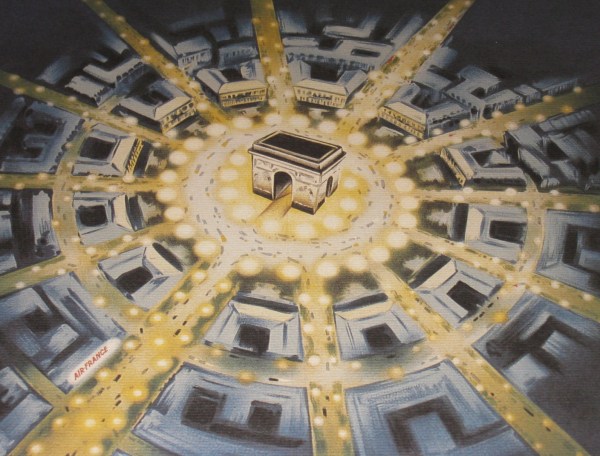
May 5: The next morning in Paris, I walked over to the Arc de Triomphe. Once again, I stood at the foot of the tomb of the Unknown Soldier, my eyes transfixed on the eternal flame. I believed a revelation would occur. Nothing external happened. But suddenly I realized the revelation was within me.

Peace begins with me.

The Unknown Soldier buried beneath the massive monument was a man with a body who fought in Verdun. It’s so hard to remember that fact when you’re faced with the massive surfaces of stone, marble and brass. He had a life, he was part of a family, and he had a heart. In Verdun, the soldiers died. Most walked into the battle knowing they would die. They died fighting in a war that was to end all wars. And yet, the world continues to war on the outside.

For me, there was an echo that I now understood: 

Remember them. Remember the gift they gave you. The peace begins within you.

Continue reading “Returning to the heart with peace”

Wordsworth: “Our senses drink in the secrets of nature…”

From Karen Armstrong’s new book, Sacred Nature: If we allow it to enter our lives, nature can inform our minds and become a formative influence.

We can begin by taking simple steps, perhaps sitting in a garden or a park for 10 minutes a day, without headphones or a mobile phone, simply registering the sights and sounds of nature. Instead of taking photographs of our surroundings, we should look at the birds, flowers, clouds and trees and let them impress themselves on our minds.

Continue reading

Trees Places

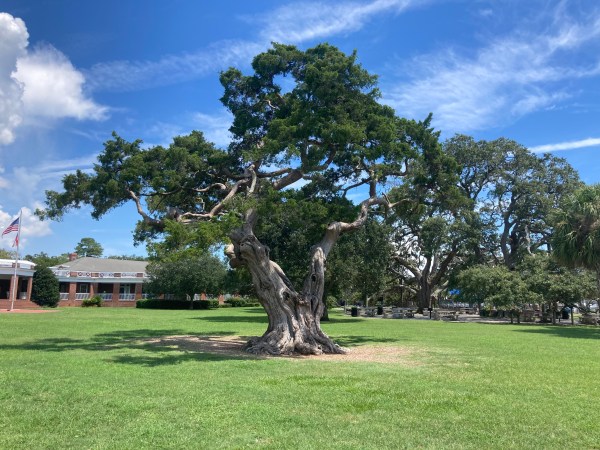
Tree Places” is pattern 171 in A Pattern Language by Christopher Alexander, Sara Ishikawa and Murray Silverstein. “Trees are precious. Keep them. Leave them intact.”

From the book A Pattern Language: “The trees that people love create special social places: places to be in, and pass through, places you can dream about, and places you can draw. Trees have the potential to create various kinds of social places:

  • an umbrella—where a single, low-sprawling tree like a live oak defines an outdoor room
  • a pair—where two trees form a gateway
  • a grove—where several trees cluster together
  • a square—where they enclose an open space
  • an avenue—where a double row of trees, their crowns touching, line a path or street
Continue reading “Trees Places”

Pax (peace) in Montfaucon

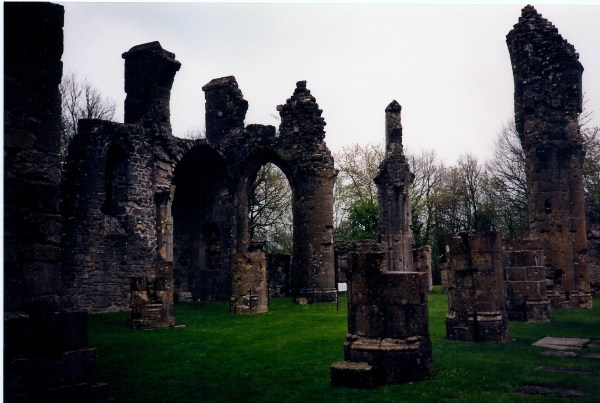
It’s a notable discovery when a single nugget of information ‘suddenly’ transforms a place. This summer I found a new connection to an old story. Turns out there was a Benedictine monastery in Montfaucon, France. It was destroyed in World War I although some church ruins remain.

There would have been a main entrance to the grounds of the former Benedictine monastery founded in the 6th century. Over the archway would have been the message: Pax intrantibus—Peace to those who enter here. (Or perhaps just Pax.)

Continue reading “Pax (peace) in Montfaucon”

Helping the Human Spirit in Its Search for Peace

Today is Father’s Day. Ten years ago while in a bookstore in Highlands, North Carolina, an orange leaf on a book cover caught my attention. I read the title “Parting – A Handbook for Spiritual Care Near the End of Life.” 

My initial thought, “It’s too late for that book.” My dad had passed away in April and the grief was raw in June.  I had believed he would live for many more decades due to his love of life and learning. But everyone was blindsided when he was diagnosed in March.  

Instead of passing by the book, I picked it up and read the Foreword, which included:

… Spiritual care for the purpose of this handbook is soul care, helping the human spirit in its search for peace. It is the attempt to help those near the end of life feel whole, fulfilled, and in harmony with their world and higher power. Religious experience may or may not be spiritual, and spiritual experience may or may not be religious. Regardless of the dying person’s religion or persuasion or faith tradition, spiritual care near the end of life supplies a deep human need.

My personal grief provided an heightened awareness of the collective grief. My dad had ensured everything was in order, but that orderliness didn’t lessen the grief, sorrow or the immense loss I felt and experienced.

Continue reading “Helping the Human Spirit in Its Search for Peace”

Blog at WordPress.com.

Up ↑