“What will happen to our hearts if there is no place to find the beauty of emptiness in an overstuffed world? “ – Joan Chittister
Four components of a restorative environment
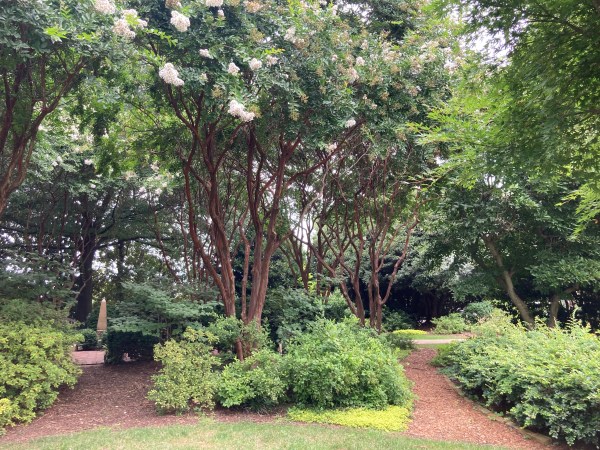
The sheltering space underneath a canopy of white crepe myrtles held the four components of a restorative environment:
Continue reading “Four components of a restorative environment”Finding a sheltering space (not a coffee shop)
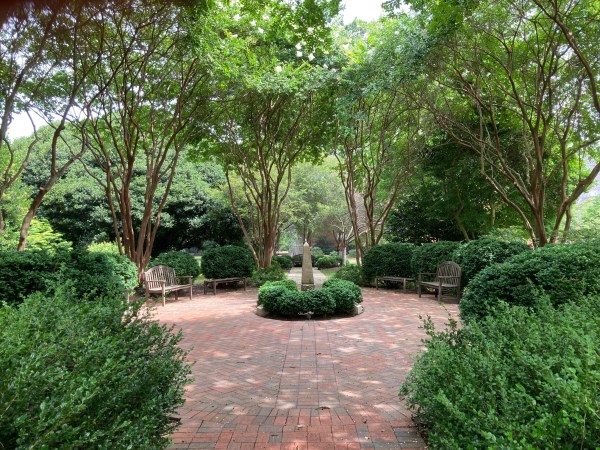
In my creative meanders, this garden visit was on a whim. (Proving “yes” is the best response to an encouraging inner nudge to explore something unknown or forgotten.)
I entered a canopy of white crepe myrtles that created a sheltering space. It seemed as if two hands held an offering to any visitor. I sat on a bench and listened. The gentle bubbling of the fountain, the birdsong, the wind rustling leaves. I watched the water run down the side of the marble fountain. It was a place of peace. I felt unexpectedly happy as my eyes explored this space of details easily missed by sweeping surface glances.
Continue reading “Finding a sheltering space (not a coffee shop)”Learning about restorative gardens

Taking the Introduction to Therapeutic Horticulture course (online) during May-July enabled me to see the “hidden” structures in gardens. Of course, the structure is always in clear view, but I haven’t attended to those details until now.
My interest has landed on restorative gardens, the characteristics in healing gardens and the therapeutic power of beauty. Here’s what holding my attention this month:
Four phases of interaction in nature (addressed in Johan Ottosson’s doctoral thesis, The Importance of Nature in Coping):
- Phase I – Inert objects
- Phase II – Plants and greenery
- Phase I + II – Nature
- Phase III – Animals
- Phase IV – People
Eight characteristics of a restorative garden (Grahn, 1991) (Stigsdotter 2015):
- Serene
- Wild
- Rich in species
- Space
- The common
- The pleasure garden
- Festive
- Culture
Placemaking inspires reinvention
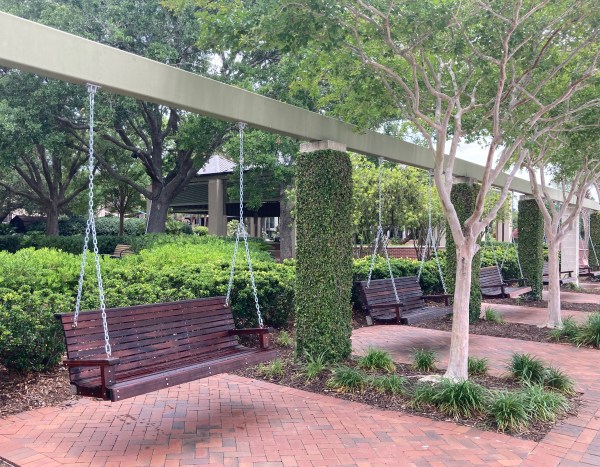
From the Project for Public Spaces: Placemaking inspires people to collectively reimagine and reinvent public spaces as the heart of every community. Strengthening the connection between people and the places they share, placemaking refers to a collaborative process by which we can shape our public realm in order to maximize shared value. More than just promoting better urban design, placemaking facilitates creative patterns of use, paying particular attention to the physical, cultural, and social identities that define a place and support its ongoing evolution.
When you focus on place, you do everything differently
Read more from Project for Public Spaces: What is Placemaking?
You’ll find a Placemaking booklet on the PPS page that you can download.
Discovering “place maker” and contemplating “peace maker”
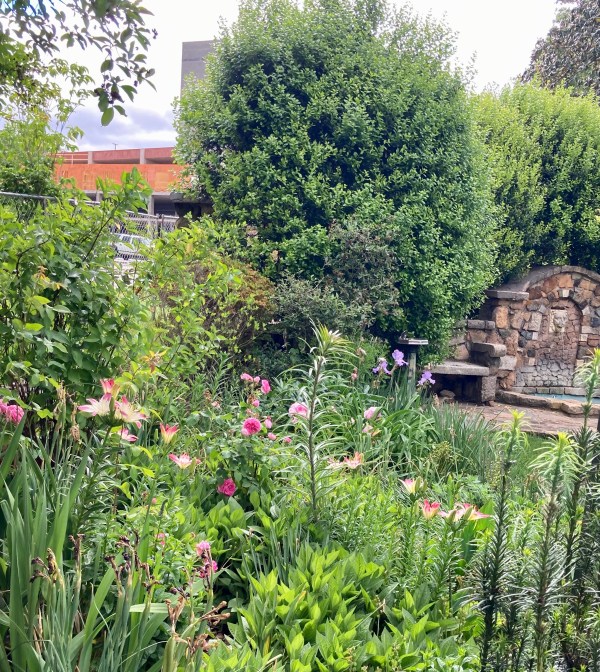
“I feel called to be a ‘place maker’ to set down roots in a society that is constantly on the move.” – H.D.
My introduction to “place maker” arrived when I read H.D.’s forum post regarding her interest in therapeutic horticulture as the course ends. My mind kept playing with “l” and “e”: place maker | peace maker. I could see the interconnectedness in the interplay of place and peace.
What else could I find?
Continue reading “Discovering “place maker” and contemplating “peace maker””The plant would still be distinguished… and that in itself is its own reward
“Struggling over steep hills covered with hedgerows, trees, and generally impenetrable jungle, one of my men turned to me and pointed a hand, filled with cuts and scratches, at a rather distinguished-looking plant with soft red flowers… – Sandy Kempner
I received an email on Friday and learned an acquaintance was reading Resurgam. Although he was on page 39, he offered feedback, which included: “Phil, we learn, is a poet, but there is also Sandy’s beautiful and profound letter. The reader is led not simply to hear such voices respectfully but to think along with their spirit. His cherished plant among the blasted warscape provoked in me this remembrance of Whitehead’s words….“
With the mention of Sandy Kempner’s letter, the plant with red flowers waving gaily in the downpour and the tired Marine who wrote the letter arrived in my memory. What timing.
Beauty as a form of emotional nourishment
This letter records beauty as a form of emotional nourishment. Originally, I found Sandy’s letter in the early months of my search for Alpha Company way back in my late twenties. For me, so much was unknown and there were many battles with doubt at that time. The unexpected beauty described in Sandy’s letter offered a completely different perspective.
Continue reading “The plant would still be distinguished… and that in itself is its own reward”Beauty as seen by Sandy Kempner
“It makes a sound, and the plant was beautiful, and the thought was kind, and the person was humane, and distinguished and brave, not merely because other people recognized it as such, but because it is, and it is, and it is.“
Dear Aunt Fannie,
This morning, my platoon and I were finishing up a three-day patrol. Struggling over steep hills covered with hedgerows, trees, and generally impenetrable jungle, one of my men turned to me and pointed a hand, filled with cuts and scratches, at a rather distinguished-looking plant with soft red flowers waving gaily in the downpour (which had been going on ever since the patrol began) and said, “That is the first plant I have seen today which didn’t have thorns on it.” I immediately thought of you.
Beauty is a form of emotional nourishment
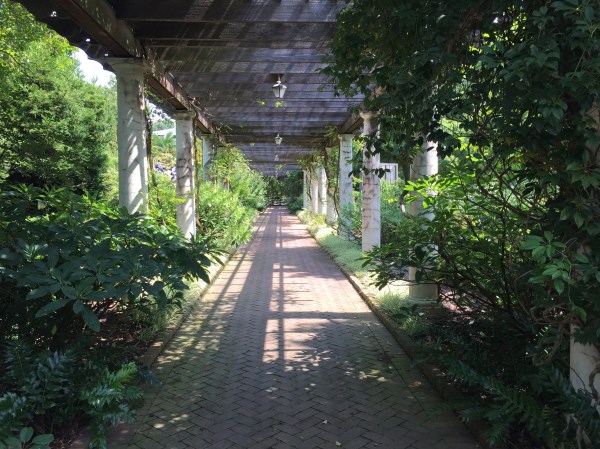
“It’s important not to overlook the therapeutic power of beauty. Beauty is a form of emotional nourishment. Research shows how powerfully it activates the emotional centers deep in the brain. This effect is not unique to the garden, but a garden can offer us a concentrated dose of natural beauty.*”
Continue reading “Beauty is a form of emotional nourishment”Discovering the Oratory of the Heart
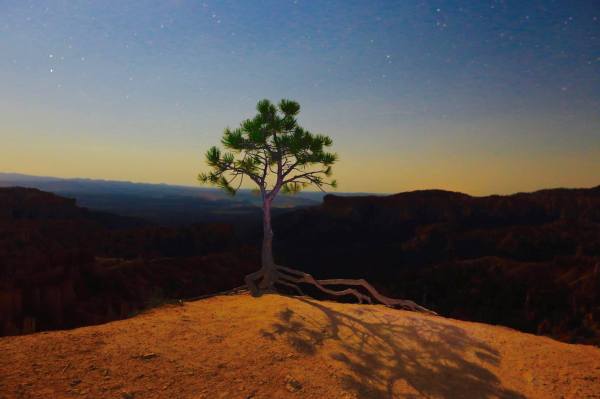
Joan Chittister writes: “… you have to make an oratory for yourself somehow. Take a long walk alone, perhaps, where the whipping wind or the bursting of trees can bring you back to the essentials, the basics of life. The point is that your “oratory” is whatever invites you, lifts your soul beyond the daily and the mundane. The oratories of the heart are any place that recalls you to your spiritual self.”
I have continued to return to Joan Chittister’s words in the chapter “The Oratory – On Holy Space” from her book The Monastic Heart.
I landed in the oratory during February and continued to return to the pages due to its resonance. Why do these words speak to me? Initially, I thought it was the discovery of the word, “oratory” for chapel. I remembered the Chapel of the Palms. This small, simple oratory sits by the Edisto River, which flows—within eyesight—into the Atlantic Ocean. To be there—even on the ground of remembrance—is to notice hidden transitions.
And still, the oratory resonated, so I wanted to share this chapter with others. It was the timing of my decision to share that finally illuminated a deeper understanding and meaning.
March 13, 2022, the two-year mark
It is March 13, 2022, the two-year mark since all organized activities were cancelled for two weeks in March 2020 due to the unknowns of COVID virus. Those two weeks transformed into a stay at home mandate in April 2020. Routines were swept away and life upended.
As I reflected on those early months, I realized the oratory speaks to my heart and spirit because I created an oratory but wasn’t aware of the creation until I read about the oratory.
Now I understand that COVID restrictions didn’t block access to this space. Visiting hours remained open. There wasn’t any mask mandate. The only requirement was to find time to visit—to pause, to settle, to rest, to find peace—and finally, to be at peace.
I entered a variety of oratories during these two years. There was a back yard deck, the detailed memory of the Chapel of the Palms by the water, the neighbor’s backyard garden with the koi pond, a friend’s covered dock with unexpected sightings of dolphins, walks on the beach, a porch swing on a river walk, a bench at a church’s columbarium, a yoga mat, but most importantly, the space within the heart. In these past two years, I have visited the oratory in my heart more than I have ever visited it before. Maybe that’s the truth I needed to discover this week as the world faces another challenge. And this I know with great certainty in this uncertain world: There is an expansive network of hidden oratories. The community of prayer has grown stronger during these two years. Where is your oratory? How many have you created and visited during these past two years?
Excerpts from “The Oratory – On Holy Space” from Joan Chittister’s book The Monastic Heart:
… Now, in these times, we are at the very same kind of moment: Churches are closing as congregations move or disappear. Massive cathedrals stand alone in the cities, still cavernous, too often empty. Now, perhaps more than ever, we need to “let the oratory be what it is called.” We must let it call us beyond our present overwhelmed selves. What will happen to our hearts if there is no place for us to find the beauty of emptiness in an overstuffed world? We live in an overnoisy, overcrowded, overstimulating round of events, with hardly a break to think through the important questions of life: What is life about? What is the purpose of our lives? How can we possibly make things better, more whole, for our families, for our world, for ourselves?
… The oratory tells you that you yourself must reach out, stop, sink down inside yourself, and let the weariness, the pain, the fear of abandonment evaporate and go to dust in the presence of the soothing warmth of faith and the promises of security, beauty, joy, and happiness that come with the presence of God in your life.
The Intimate Familiarity of a Place Known is the Not Knowing Place
“The perfection is in the repetition, the sheer ordinariness, the intimate familiarity of a place known because we have visited it again and again in so many different moments.”
As I reread the words by Wayne Muller on April 8 while under a Staying at Home order, I recognized the intimate familiarity of “a place known,” was the unknown. I have spent a lot time writing about the unknown, but rarely valued its true worth. Throughout life, it served as a catalyst. I always wanted to know, to find the answer and take a step into knowing. Time spent not knowing was viewed as wasted time. The receptivity of “the gift of time” during March enabled me to recognize the Not Knowing Place. And as Muller suggested, I have visited it again and again in so many different moments. Through all the seasons, through all the years, through all the days, and even in the moments, I have found myself in the Not Knowing Place. I actually “knew” this place! Continue reading “The Intimate Familiarity of a Place Known is the Not Knowing Place”
Paying Attention to the Known and Unknown of Life
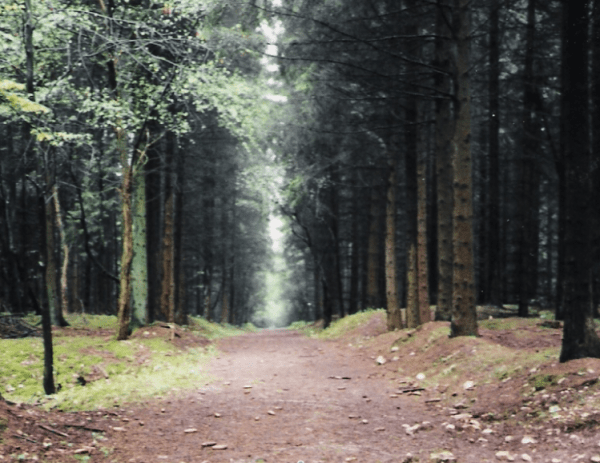
My creative meander in March that started with Receiving the Precious Gift of Time led me back to familiar ground in June. During the uncertainty and upheavals between March and June, I revisited chapters from “A Year to Live” by Stephen Levine. Noticing, Gratitude and A Commitment to Life helped me befriend the unknown. His book provided hope and structure during the months of change out of my control. Here’s the first paragraph from the Introduction:
This is a book of renewal. It is not simply about dying but about the restoration of the heart, which occurs when we confront our life and death with mercy and awareness. It is an opportunity to resolve our denial of death as well as our denial of life in a year-long experiment in healing, joy, and revitalization.
When my calendar was cleared in March, I felt the loss of routine and social interaction. I was naively hopeful, expecting that we would return to something new in April. There was no return in April but there was something new: Stay At Home orders.
With nowhere to go, few distractions, I kept writing about what I encountered during the global pandemic. Changes out of my control and transitions experienced during long-distance caregiving and end of life care (2010-2017) helped me in many ways during the Stay at Home months. I had experienced a micro of this unexpected macro that started in March.
Ten years ago, an orange leaf on the front cover of a book caught my attention while browsing in a bookstore. I saw the title “Parting” and then “A Handbook for Spiritual Care Near the End of Life.”
My initial thought, “It’s too late for that book.” My dad had passed away in April 2010 and my grief was raw in June 2010. I had believed he would live into his nineties due to his love of life and learning. Everyone was blindsided when he was diagnosed in March and offered a hopeful prognosis.
Instead of dismissing the book, I picked it up and read the Foreword, which included: …Spiritual care for the purpose of this handbook is soul care, helping the human spirit in its search for peace. It is the attempt to help those near the end of life feel whole, fulfilled, and in harmony with their world and higher power. Religious experience may or may not be spiritual, and spiritual experience may or may not be religious. Regardless of the dying person’s religion or persuasion or faith tradition, spiritual care near the end of life supplies a deep human need.
I bought the book that day in 2010 and read it during Father’s Day weekend. An odd thing to do—dive into the dying, but my motivation was to dissect the misery and what had transpired in forty days. I needed to understand and “helping the human spirit in its search for peace” offered a light of peace in the unfamiliar darkness that descends with death. I accepted the light. It was as gentle as a single candle flame.
Found of page 3 in Parting:
One physician says that the best way to improve spiritual care for the dying is to improve it for the living. All too often, the day-to-day business of life gets in the way of the inner life. Death clears the calendar; it uncrowds life so that spiritual needs come to the forefront.
I asked myself, “Why wait? Why wait until end of life to pay attention to our spiritual needs? Why not now?” These questions have stuck with me since 2010. Time and time again, I cycled through change and transition due to a loss or a death. I would find peace and then lose it. Some “thing,” or connection, seemed to be missing. The physician touched upon it in “Parting”, the day-to-day business of life gets in the way of the inner life. In March 2020 there was suddenly time to pay attention to the inner life. The two-week “hold” that transformed into a Stay at Home order was lifted on May 22. Plans for 2020 died. The death of the familiar day-to-day routines cleared the calendar. Ways of doing changed. Ordinary events were no longer ordinary (or no longer existed). There have been many endings and each ending carried varying degrees of loss and grief. There was familiarity but disconnection, and a lot of unknown. The outside world looked the same, but there was an unseen hill of loss.
I had been here before.
And so Levine’s words return, replacing book with journey, and dying with what has died:
This is a journey of renewal. It is not simply about (what has died) but about the restoration of the heart, which occurs when we confront our life and death with mercy and awareness. It is an opportunity to resolve our denial of death as well as our denial of life in a year-long experiment in healing, joy, and revitalization.
Next: The Intimate Familiarity of a Place Known is the Not Knowing Place
Receiving the Precious Gift of Time
By Friday night, March 13, all organized activities and classes were cancelled, and I realized the pandemic had cleared my calendar for at least two weeks. Life suddenly became uncrowded as daily routines were swept away.
In the clearing, I saw the precious gift we have received:
the gift of time.
For at least the next two weeks, there is an abundance of unscheduled time. How often does this happen in a lifetime? What discoveries are within reach if one’s focus shifts away from scarcity to recognizing this unexpected opportunity in this present life?
The gift has been given and although I cannot hold it in my hands, I can acknowledge the gift and receive it. Continue reading “Receiving the Precious Gift of Time”
Gifts that Keep Giving
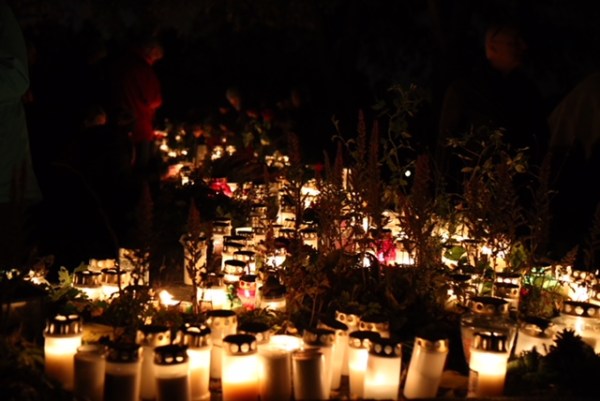
I just cycled back to Phil Constineau’s pilgrimage to Angkor Wat. I bought The Art of Pilgrimage when it was just published in 1998. Only recently I recognized the deeper connections: Angkor Wat was the center of Phil’s book, and the spark that would light his travelers lamp was a book from Phil’s dad.
This book quietly illuminates the full circuit of a living gift. It keeps giving and the reach continues to expand.
Discovering the Hidden Beauty of the World
Phil received the book about Angkor Wat on his eleventh birthday. It wasn’t a gift he had asked for, but the bronze-tinted book depicted sculptures of the long forgotten world of the Khmers that transported the eleven-year old beyond known boundaries. Continue reading “Gifts that Keep Giving”
Recognizing the Vastness That Has the Potential to Transform Us
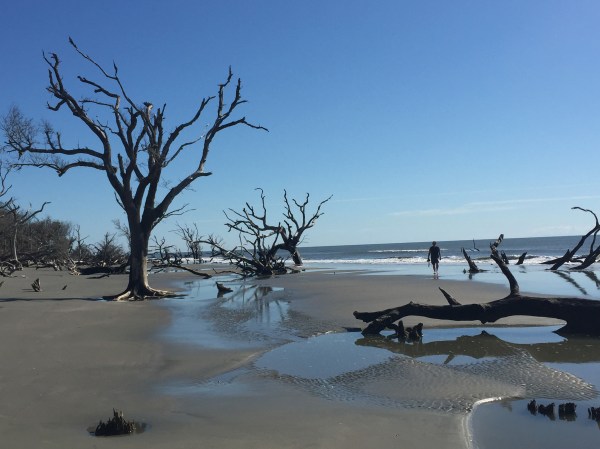
“The rewards are infinite when we keep looking.”
As soon as I read that sentence by Mark Nepo, I thought of my friend walking the shore of Boneyard Beach immersed in his creative process.
Nepo’s words are in the chapter “Going with the Stream” from his book “Drinking From the River of Light.” The chapter begins with an epigraph by Yogananda:
Never give up, then surrender
Continue reading “Recognizing the Vastness That Has the Potential to Transform Us”
Recognize Creative Tension as a Source of Creative Energy

Once again, I found myself stuck in the foggy gap. I’ve been focused on defining my vision for this second half of life (not a bad thing) but there’s a lot of unknown in this new life. I got fixated on the fog of uncertainty, but today I caught a glimpse of what was in front of me: the reality of creative tension. Once again, the fog lifts (and I do recognize this is a pattern).
What is creative tension?
I’ve been approaching creative tension as the obstacle, which is a big mistake. It can actually be the force to move me forward. Peter Senge dives into the topic in his book, The Fifth Discipline:
The juxtaposition of vision (what we want) and a clear picture of current reality (where we are relative to what we want) generates what we call “creative tension”: a force to bring them together, caused by the natural tendency of tension to seek resolution.
The gap is the creative tension
Senge continues later in the book: The gap between vision and current reality is also a source of energy. If there was no gap, there would be no need for any action to move toward the vision… Continue reading “Recognize Creative Tension as a Source of Creative Energy”
Sitting Under Such Enormous Space
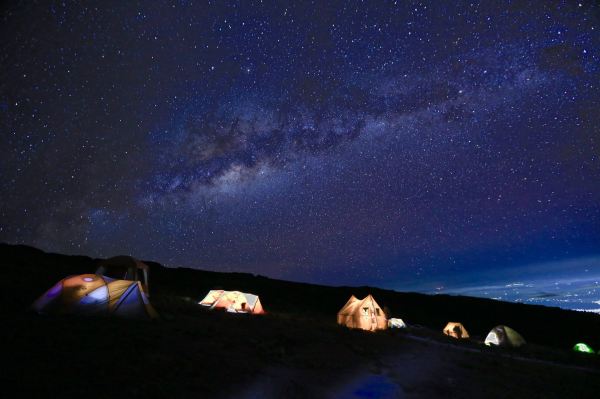
From “Learning to Walk in the Dark” by Barbara Brown Taylor:
“How long since we have done this?” Ed asks in my ear.
How long since we have left our house, which we know so well, to climb a hill and sit next to each other in the dark with nothing to do but wait for the moon to rise? How long since we have sat quietly under such enormous space?
“Twenty years,” I say.
“Why is that?” he says.
He and I both know why, but the answer makes me so sad that I cannot say it out loud. We have been busy. For twenty years.
Busy? The word loses all meaning under the canopy of this sky.
My mother’s dementia forced me to enter into deep paradoxes — to lose my mother while she was alive, to encounter the stranger in someone I had known all my life, to face the double bind — and respond the best way I could at the time.
Look with the Heart, Not the Eye of a Stranger
So much truth in the words from the banquet speech of the 2015 Nobel Prize Winner in Literature, Svetlana Alexievich.
“Why do I write? I have been called a writer of catastrophes, but that isn’t true. I am always looking for words of love. Hate will not save us. Only love. And I have hope.
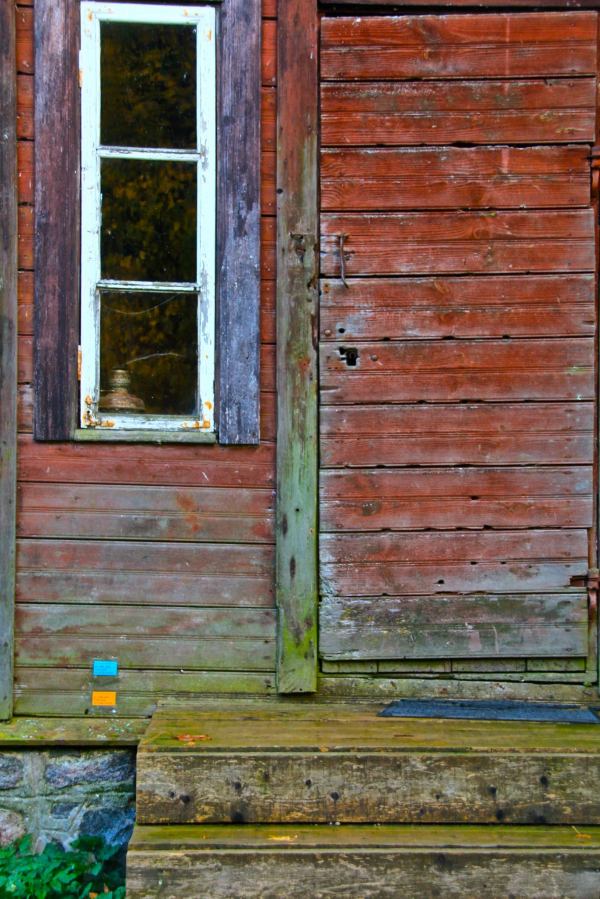
… In one Belarusian village, an old woman bade me farewell with the following words: “Soon we will go our separate ways. Thank you for listening to me and for conveying my pain to other people. I beg you, as you leave, to have a look at my little cabin not only once, but twice. When a person looks a second time, it is not with the eye of a stranger, it is a look with the heart …”
(Excerpts are from Svetlana Alexievich’s banquet speech during the Nobel Prize Banquet on December 10, 2015)
Continue reading “Look with the Heart, Not the Eye of a Stranger”
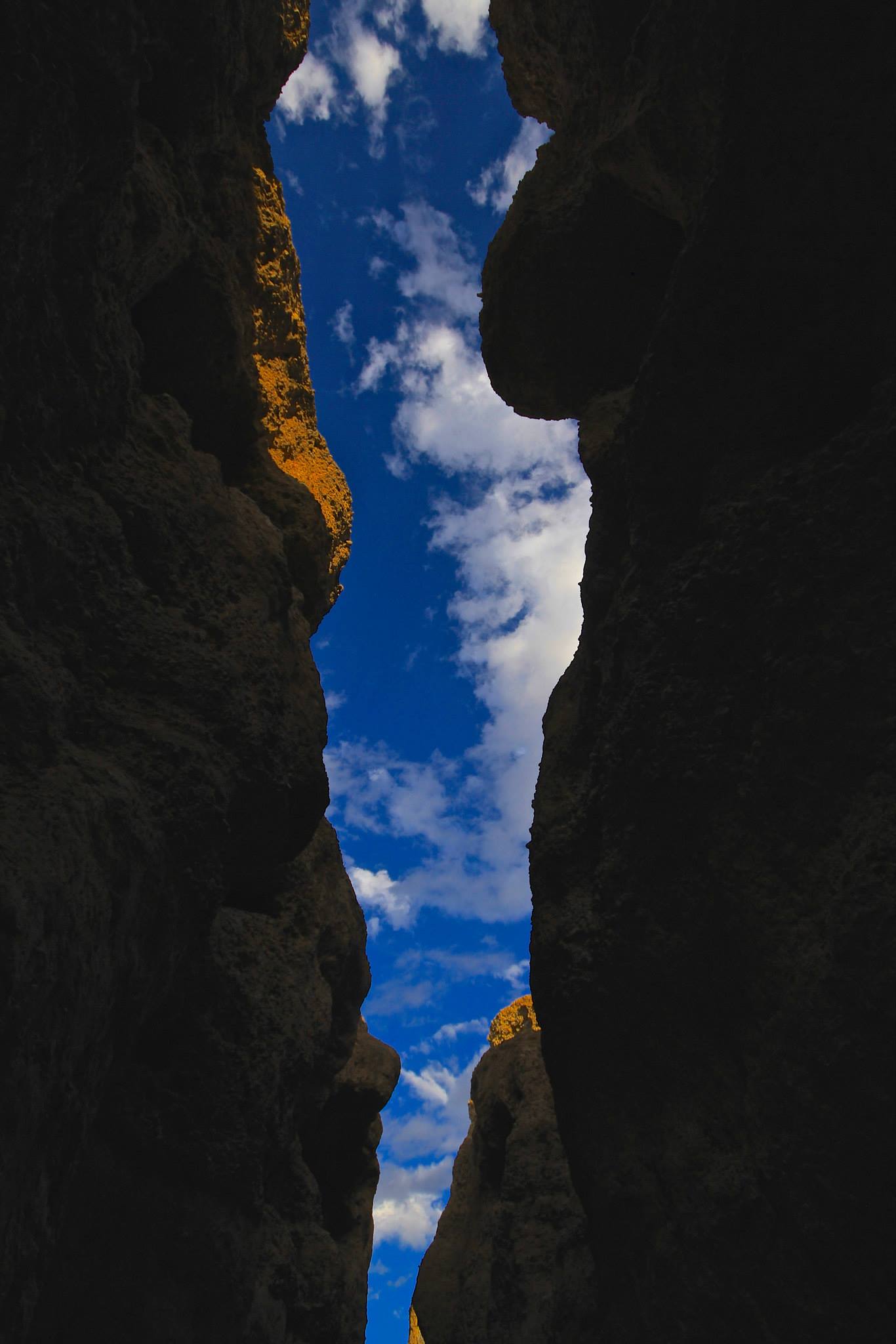
“We lose track of time and of place, we move into a timeless time and a placeless space when we are in a creative state. Afterward, we know we have tasted something worth remembering, something that will last. And often we have a special gift to bestow on others because of the journey we have undergone in our creative work.” —From the book “Creativity” by Matthew Fox.
Ten years ago—July 28, 2009—a fierce thunderstorm raged outside. The lightening was so intense, I decided to unplug all electronic devices and read a book. Unexpectedly, the image of a soldier dressed in combat fatigues flashed in my imagination as vividly as the lightning outside.

Continue reading “Why I Wrote about Standing in No Man’s Land during the WWI Christmas Truce”
“Creativity is not a noun or even a verb—it is a place, a space, a gathering, a union, a where—wherein the Divine powers of creativity and the human power of imagination join forces. Where the two come together is where beauty and grace happen and, indeed, explode.”
Matthew Fox, from his book, “Creativity”
 creative meander